Preserving Jazz History for Over 100 Years: The Colored Musicians Club

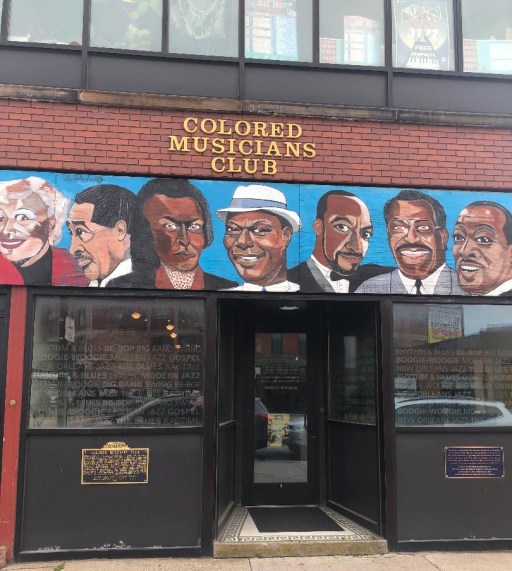
CMC building

Standing in the heart of buffalo, the national landmark at 145 Broadway St. holds more than just a functioning jazz club and museum. It stands now as it has stood for the past 80 years, as an integral part of the music community.

The history of this institution has fostered some of the greatest musicians in the jazz world as well as provided a welcome home for those passing through.

The story of the historic Colored Musicians Club begins with the local 533. The 533 was the official organized union for African American musicians in buffalo. Formed in 1917, the 533 provided an opportunity for African American musicians all across the Buffalo area, who at the time were barred from the local 43 musician’s union in buffalo, to find work for a fair wage as well as receive health and credit benefits. A year later members of the newly formed 533 established the Colored Musicians Club. A friendly place where musicians in the 533 could meet up to unwind after a show with a drink, play cards, and jam.

“back in the day jam sessions were huge for musicians. It was this kind of loose thing where you can just go in there… and then you get a chance to express yourself musically” said current Club president George Scott.

“you get to talk to them (other musicians) in between songs, and ask questions like ‘hey man how’d you do that run, and he’ll be willing,…  to break it down slow, and you practice that… that’s why going up to the club after hours was great, because they talked a lot of that”
CMC shep Davis
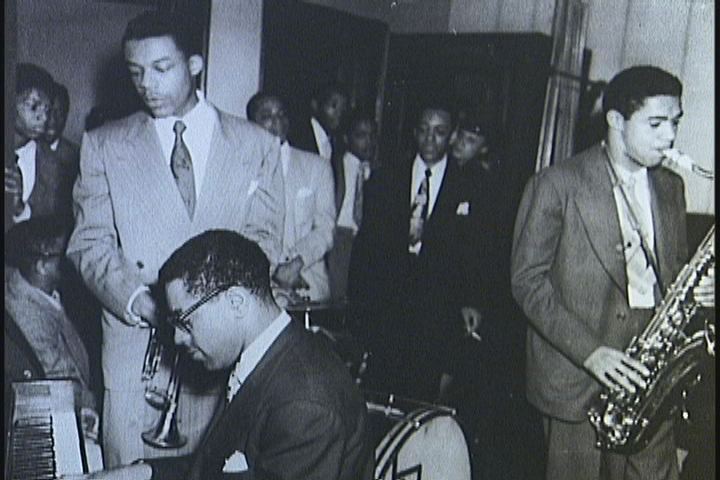
A jam session at the Colored Musicians Club with up and coming buffalo Jazz musician Elvin Shepard, Looking down with his trumpet at Jazz great Miles Davis on the piano

This club provided a place of comfort for members to play with one another free of pressure and judgment. It wasn’t uncommon for jam sessions to go well into the early hours of the morning, as the creative force of improvised piano riffs, deep base lines and trumpet solos resonated through the musicians and spectators alike.

Shortly after the formation of the 533 came the golden age of Jazz in America. The Roaring Twenties. During the prohibition era speakeasies were rampant across the country and buffalo was not immune. With the underground world of alcohol consumption came the overwhelming demand for creativity and musicianship. With the newly formed union, work for the jazz musicians in the 533 was in no short supply.

It wasn’t just anyone who could wear the title of the 533, applicants had to audition in front of a panel of veteran musicians, leaving the reputation of the union held in high regard.

“The Colored Musicians Club had standards, you had to be the best” said Walt, a club board member, and local musician. With segregation plaguing the community at the time, the 533 needed to have the skill to outweigh the racial prejudice. “we had to make sure we were the best so they always wanted us back” Walt stated.

And the talent didn’t go unnoticed.

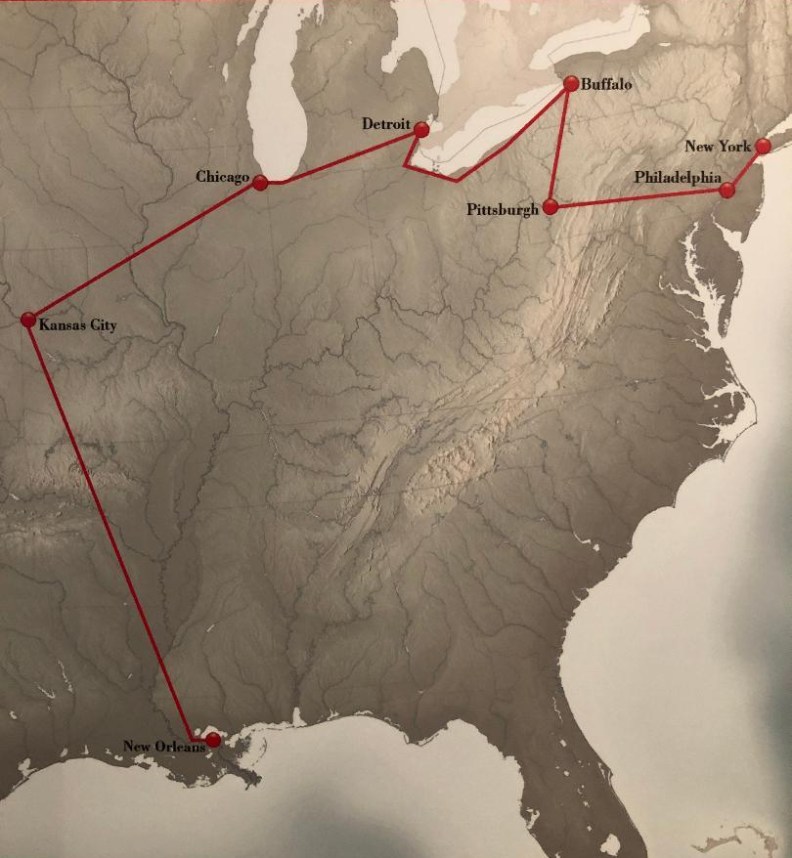
During the booming days of jazz, the hottest spots in the country were New Orleans, Chicago, and New York. When traveling the famous “Chitlen’ Circuit”, the main music circuit for black musicians of the time, the best musicians in the world would pass straight through Buffalo. Many would often stop to play with some of the 533 members, and spend a night or two at the club. When traveling the circuit, big names like Miles Davis, Dizzy Gillespie and Ella Fitzgerald recognized the talent of the members and, in some occasions pick them up on their tour.
CMC map

Traveling was difficult for a large band, which led many of the jazz greats to travel light and leave room to pick up new talent along the way.

“they would bring the core guys, then they would fluff the rest of the band with local people” Scott noted.

Then came the 1960’s. with the civil rights movement barreling through the United States, institutions were becoming desegregated across the country. When the two musicians unions became integrated in 1969, many members of the former 533 felt it had put them at a disadvantage.

“533 had a name, had a reputation, 43 didn’t have that, you know 43 didn’t get Dizzy (Gillespie) coming to their place, or in their union. 43 didn’t get Lina horn, they didn’t get Basie band, they didn’t get any of those people. And that was the music that the people wanted to hear.”

However the home of the 533 on Broadway remained in the name of the Colored Musicians Club, not the local 533, and therefore could keep its identity. Not long after the integration of the two unions, the club was declared a local county landmark in 1979
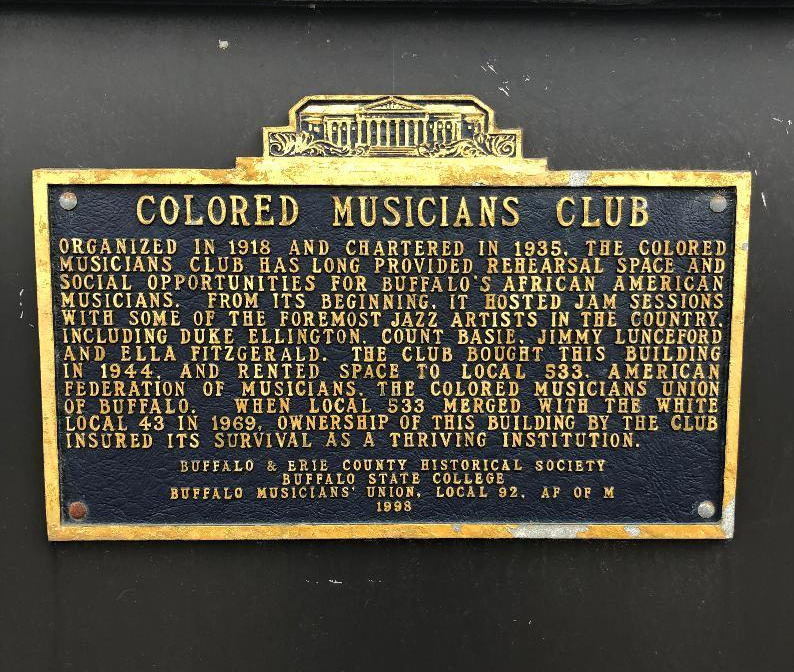
CMC original plaque


During the heyday of Buffalo Jazz many musical greats such as Lil Harden Armstrong, renowned jazz pianist and former husband of Louis Armstrong; Pete Johnson, pioneer of the ‘Boogie-Woogie’ style of piano; and Al Tinney, a founder of what is now know as ‘Be-Bop’ jazz, were all members of the club.


(Pete Johnson- Boogie-Woogie-style piano)

(Al Tinney’s Bebop jazz, played by Dizzy Gillespie)

However, nobody embodies the impact of the club better than Elvin Shepard. At just 17 years old Shepard was noticed one night during a jam session at the Colored Musicians Club, and immediately offered a gig by a local nightclub owner. After being first recognized at the club, Shepard’s prestige on both the trumpet and saxophone lead him across country, accompanying some of the biggest names in the jazz world, including Della Reese, Gladys Knight, and the Queen of soul herself, Ms. Aretha Franklin.
CMC shep
Elvin Shepard

Shepard, nicknamed ‘Shep’, was also a teacher and mentor to the iconic saxophone player Grover Washington Jr.. Also a member of the Colored Musicians Club, Washington went on to win two Grammy awards for his album ‘Winelight’.
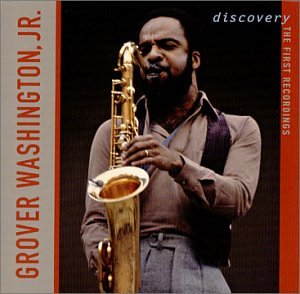
CMC GWjr


Although some may argue the days of jazz music only exist in history, the club has carried its legacy well into present day. A variety of local jazz musicians still perform at the club on a weekly basis as well as a 17-piece band featured every Thursday night, led by Carol Mclaughlin, an experienced saxophone player who spent his years playing with those such as Al Tinney and Sammy Davis Jr..

Along with the local performers featured, the club holds true to its legacy with open jam sessions every Sunday night where young local musicians can come and collaborate with some of the best.
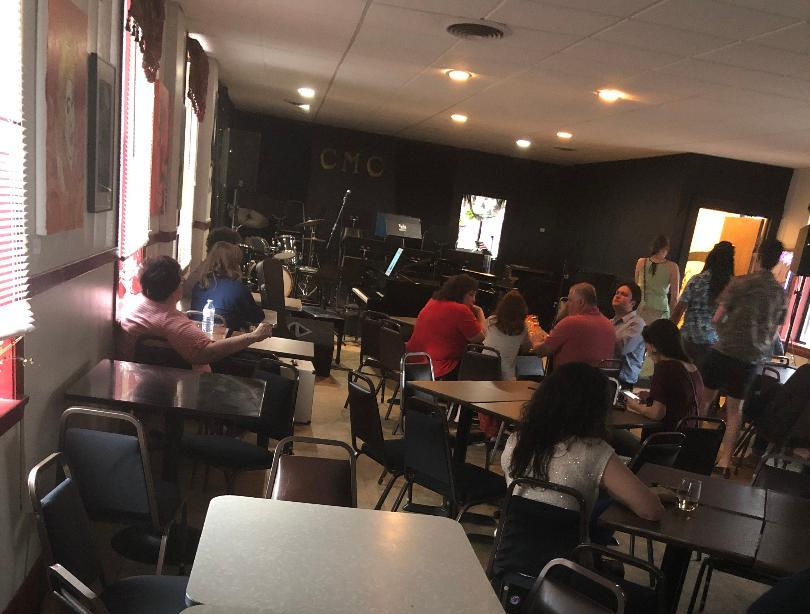
CMC club

First entering the club on the second floor of the historic building, patrons are immediately met with the atmosphere of the ‘Roaring Twenties’. Having to ring a silent doorbell and wait to be buzzed in from behind the bar, it seems like everything short of a secret password. After being granted entry, the long narrow staircase escorts guests, single file, up to the main room.

The intimate setting of the club provides only the essentials for patrons. An old wooden bar complete with stools and glassware from its heyday, accompanied only by a few tables and chairs to provide little distraction from the music. This holds true to the original founders, who needed little else to thrive in the jazz world.

The Sunday night jam sessions start off with a performance by one of many local bands featured at the club, such as the SUNY Erie Jazz Kats, led by Jim Runfola. As an inductee in the Buffalo Music Hall of Fame, Runfola has played in the Buffalo music community with the likes of Carol Mclaughlin, Jim White, and Chuck Taylor. Comprised of local high school and college students, the Jazz Kats feature many elements of what the club embodies, young ambitious musicians with the talent to match their energy.


“This is the first group that I thought could play here” said Runfola, Speaking to both the talent of the young ensemble, as well as the fierce reputation of the Colored Musicians Club.

After the Sunday night performance many members of the band stick around to play with one and other as well as anyone in the community who wants to show up. Even club staff, many of which are local musicians, join in. “they start with whoever’s featured,… and then they’ll invite different guest up to play” said Heather, a local trumpet player, and frequenter of the Club’s Sunday jam sessions “everybody seems to jell really nicely”.

Although everyone is welcome to participate, it is up to the musician themselves to hold their own and prove their skill. If you don’t measure up you may get lost in the mix. “this place is super intimidating… so it’s a challenge for me to puff u and get out there” said Heather, “but nothing that’s made me think I don’t wanna come here”.

Keeping with the prestigious history of the club it’s no surprise that those who frequent the venue are the best jazz musicians in the area, but they encourage all styles of play. “we continue the jazz jam because its nostalgic, but we have any style come up here to play” said Walt, “you get a different crowd every hour coming through here… (it’s) a place where everyone comes to cut their teeth”

As well as the Sunday night jam sessions, the club offers lessons for local kids who may not have music programs at school, and may not be able to afford private lessons. Lessons at the club are often taught by local volunteers, who just wanted to do their part in the community.

“we just wanted to make sure that they continued the legacy of the music” said Scott

And surely carrying on the legacy of those that came before them, kids brought up through the club in recent years have gone on to play with some of the biggest names in modern music, including Nick Jonas, and Beyonce.

Below the, speakeasy styled nightclub, sits a beautiful museum where guests can not only see the history of the club and the local 533, but hear it. Guest at the Club’s museum can put on headphones and immediately be immersed in the music of the time. The audio features dozens of tracks from the most prominent members of the 533, including Dodo Greene, Frankie Dunlop, and Billy Eckstein.

The museum also features a section where guests can freely manipulate recordings to isolate certain instruments withing the ensemble in order to hear how each solo or accompaniment is played.
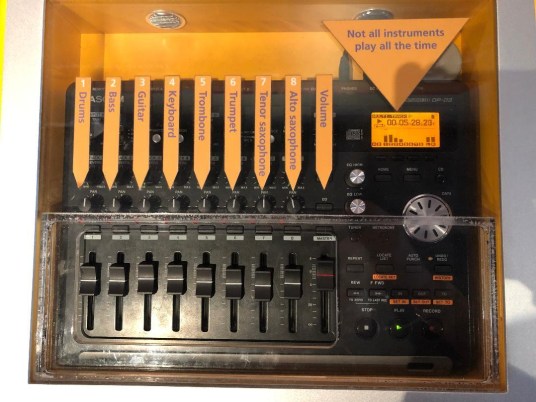
CMC sound board

The tracks featured in this exhibit are recorded by local jazz group, the George Scott Big Band, and include ‘Mr. Magic’, originally written by Grover Washington Jr., as well as the famous ‘Some Where Over the Rainbow’ from ‘The Wizard of Oz’, written by Buffalo composer, Harold Arlen.

In 2004, on the 70th anniversary of the Club’s official home at 145 Broadway, they needed to do something special.

“we said let’s have a party, let’s put the stage outside and have some of the bands that we have up here, play outside” Scott recalls, “in fact the first festival none of the musicians got paid, everybody volunteered to do it for the sake of the anniversary,”… “it was, more or less, word of mouth, we didn’t really advertise it well, that said, you know with people hearing the music we had maybe about 5,000 people that showed up the first year”

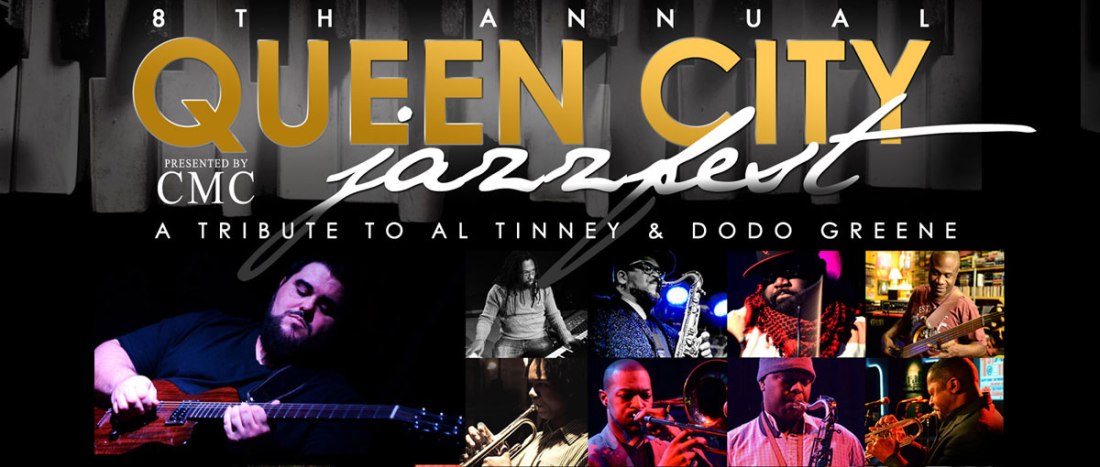
With the astounding success of the first festival, the Club’s board members decided to expand the event and make it a Buffalo tradition. Today, what we now know as Buffalo’s Queen City Music Festival takes place every July, over the course of seven days on multiple stages throughout the city to commemorate the great jazz icons of Buffalo.
CMC queen city fest

Officially deemed a national landmark in 2018 the Colored Musicians Club allows guests to travel back in time to a day where jazz music was heard throughout the country, and the Local 533 reined supreme in the music community.
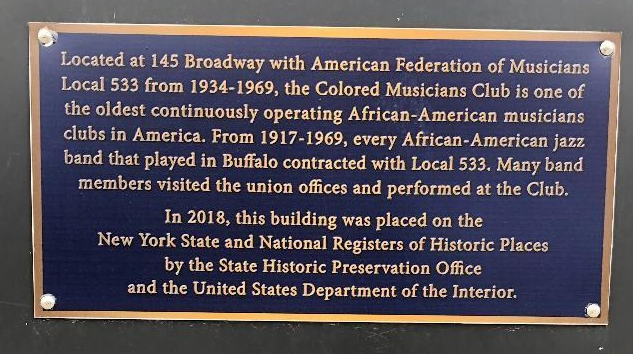
CMC 2018 plaque

After the 533 came to an end 50 years ago, the act of keeping the club and its home at 145 Broadway separate from the union was crucial to sustaining the legacy of the African American jazz community. As current president George Scott stated,

“they did that intentionally because they knew that (the merger) was gunna happen, they had a inkling… and that is why we still have the club, and more importantly we can still talk about 533. So this is the last remaining element of what 533 built. And it still sticks.”


 

ENG 212: Electric Boogalo

2016 was a crazy year. A U.S. presidential election that was ‘controversial’ to say the least, Brittan deciding to leave the E.U., and Leonardo DiCaprio finally winning an Oscar. However, looking up to the slums of Ellicott complex at the University at Buffalo, as a second semester freshman, I was taking on the freight train, that is college school work, full tilt. I was enrolled in a 200 level English class, focused on film review, in order to fulfill my second level English General education requirement. Whether it was the professor, who I wasn’t quite fond of, or just the general feeling of resentment I had toward the entire formal education system, when it came time to write one of our papers about halfway through the semester, I simply… didn’t. I didn’t forget about it, didn’t turn it in late, or incomplete. Just simply decided to not write it. The interesting thing is, though, is was a response paper on Quentin Tarantino’s Inglorious bastards, which is one of my favorite movies. And on top of that I did the rest of the assignments for that class throughout the semester and got very good grades on all of them. But despite the professor reaching out to give me opportunities to hand in the paper late, whether it being out of protest of the class, or the hope my grades on the other assignments would compensate for the missing paper, I refused.

Long story short, I got an F.

This brings me to this past winter. Now ready to go back to college after time off I knew I had to retake an English course to complete the Gen. Ed requirement that I had so ‘proudly’ failed three years ago. Browsing through the never-ending list of courses offered, only one caught my eye. How to Write Like a Journalist. Having always thought about journalism as a potential career path, I figured this would be a good start.

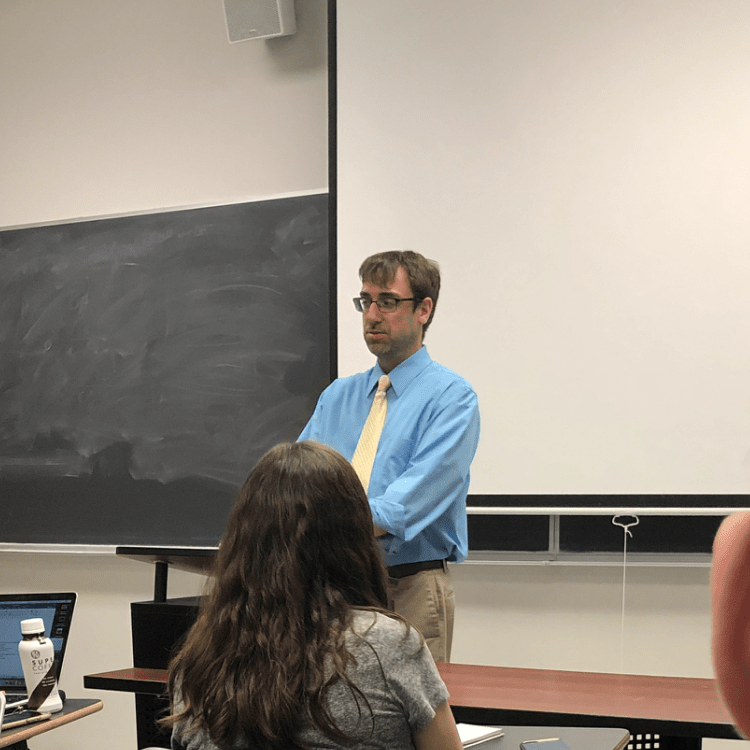
Having a professor who is not a lifelong teacher or academic creates a degree of uncertainty in a class. Some adjunct professors may not have the teaching ability, or resources required to teach a class effectively, however in some cases it may be refreshing. Not being conditioned to teach in a conventional way can open up the class to more ‘outside the box’ methods of learning. In the case of ENG 212 it was certainly the latter. Being thrown straight into the world of journalism, with the first assignment only coming a few weeks into the semester, was a bit scary, but a very effective way to learn. I feel this ‘hands on’ approach is often lost in formal education; where the practice of lecture and memorization usually wins out over trial and error (which in my opinion is the best way to learn any subject).

The workload was enough to be considered fair, but not too much that the quality of work was sacrificed in order to make a deadline. This may be the first course I’ve taken in which I have actually put in extra time on an, already completed, assignment in order to improve the quality. My only frustration is that I had to sacrifice time and effort on some of my assignments for this class in order to complete the excessive amount of work I was assigned in some of my other classes.

I loved the structure of the course. The observation drafts on the assigned readings provided good insight into professional journalism practices, and the professor was very informed on the world of professional journalism (a bit of an empty compliment, given he was a professional journalist himself).

If I could change an aspect of the course I would recommend that more class time would be delegated to discussing our articles; what we felt we did well, what we had trouble with. Overall I really enjoyed the course, I thought the freedom of choosing your own assignments really gave a good indication of how large and diverse the world of journalism really is, and gave students a good introduction into what I would actually be like to work as a journalist.

If I could go back to 2016 tomorrow and write that paper, I wouldn’t.

Paying for School, and Finding Work: Employment on Campus

Paying for college has been a big issue in the United states for a long time. With college tuition and fees still on the rise the issue of financing an education is only becoming more pressing. In the past five years the State University of New York at Buffalo (UB) has increased its cost of attendance from roughly $8,000 in 2013, to over $10,000 in 2018. That margin is even greater for non-state residents, and international students; increasing from about $19,000 in 2013 to an astonishing $27,768 in 2018. Adding on-campus housing and a meal plan, as of 2019, some students are being charged over $44,000 each year. This is clearly a very unrealistic amount of money for an average family to pay in order to put a child through an undergraduate education. Finance plans do exist for many, including state and federal grants as well as loans. These programs are extremely helpful, and what many people rely on as the sole means of getting their education; however they are not all inclusive.

UB general

International students are charged non-resident tuition and fees; however, they are not eligible for state or federal aid. What options does this leave for those who can’t afford the outrageous $44,000 a year? Many rely partially on scholarship money to reduce the cost, and some even turn to private loan companies to help finance their education. Although, many still need to supplement that money with another means of income. Work.

International students compose nearly one third of the student body at UB, many of which need to find employment for a means of paying both tuition and living expenses. According to the Department of Homeland Security  international students are restricted to on campus employment only for their first year of study, and even after that they are only permitted to work off campus through a program called Optional Practical Training (OPT). To obtain a position in a OPT program there is a string of hoops to jump through as well as many restrictions. A student must go through a designated school official in order to be recommended for an off campus position, and only then can they apply for a designated position that is in “their field of study”. On top of that OPT off-campus employment can only be held 20 hours a week, and is limited to a period of 12 months during their entire four years of college. Although some students do take this route, this is often not a viable means of employment to support the full cost of their education. This leaves many to turn to on-campus employment. In areas like the campus dinning services international students make up between 40 and 60 percent of the work force, by the account of a former employee.

c3

Finding a job on campus may not seem so bad with a New York State minimum wage set at $11.10/ hour; but remember back in 2013, tuition for international students was still a whopping $18,000 per year, not including room and board; and the state minimum wage was only $7.25/hour. A UB international student and former employee of the campus dining services talked about his experience.  He stated that he was paid “Minimum wage, which then was $9.25 an hour”. When asked if the hours were flexible he responded “No, it was a five hour shift I had once a weekend. If no one picks it up I have to go, and if I don’t go I get fired” as well as “You’re supposed to, quote unquote, get fired (for missing your shift) but they give you like two or three warnings” when addressing the stringency of the policy. The former employee also mentioned how he was responsible for finding his own shift coverage even during finals week. “I quit before finals, there was no way I was going to work and no one was gunna pick up my shift too”

The issue with on-campus employment isn’t simply the low pay and lack of flexibility, it’s the absence of competition. The bargaining power for the employees is non-existent. As little leverage as a cashier at the food court may have, there still is the threat of leaving for the Wendy’s on the other side of the mall. It’s not much but it’s the incentive that drives employers to do better. For many international students there simply are no other options.

Unfortunately, there are no simple solutions to improve employment for many international students, and the University isn’t entirely at fault. They can’t change U.S. immigration policy to give students more employment opportunities. One option for the school, however, is to provide what is deemed as a ‘living wage’, or close to it. What constitutes as a living wage has been disputed across the country for years, and is different for every person. However, the school finds itself in a rare position acting as both employer and landlord. They have the means to determine exactly what the living costs are for each student; given in many cases they are the ones charging those expenses. Even with the New York State minimum wage being as high as it is in 2019, working 20 hours per week, many on-campus employees fall short of their room and board for the year by nearly $8,000.

dorm

Many international students who have no other option but to work on campus find themselves caught in this trap, with little to no say in their day to day employment; and although the school isn’t entirely to blame they are the ones who have the power to make that difference. And it is well overdue.

The Best Thing I Read This Week

The best thing I read this week was a column from the New York Times that brings up a crucial issue in american politics and articulates it very well. The piece is titled “I’m the Child of Immigrants. I’m Not Giving up on the Republican Party.” The writer recounts his experience growing up in the US with immigrant parents, and how, being more family oriented, and religious, he naturally gravitated toward the Republican party. He then goes on to speak of how many republican reforms in recent history not only target immigration policy, but how they also seek out children of immigrants. This isolation then caused him to leave the Republican party.

Immigration

What interested me so much about this article was that it was written by someone who had experienced the subject first hand. The issue of isolating so many people based on a single issue is something that has plagued american politics, especially being dominated by only two political parties. Although much of the immigration reform started out as an issue in national politics, the writer mentions how it “Trickles down” and becomes an issue in local politics making it impossible for people to ignore. The article takes an approach that many don’t when talking about immigrant reform; there are lots of immigrants, or first generation of Americans who align with the republican party, and these are voters that the party “cant afford to alienate”.

The writer mentions how many social issues that first drew himself and many others to the party, are now, seemingly, being abandoned for harsh immigration policy. Although many are giving up altogether on the republican party, the writer concludes the article by saying that it’s crucial at this time to support politicians who are willing to work across the aisle.

The Best Thing I Read This Week

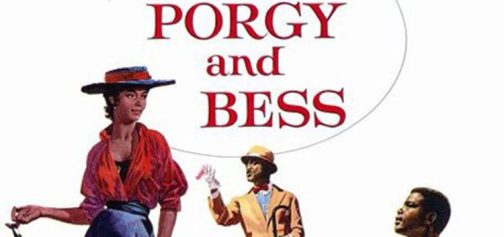
“Hungarian Opera Asks White Cast of ‘Porgy and Bess’ to Say They Are African-American”

porgy and bess

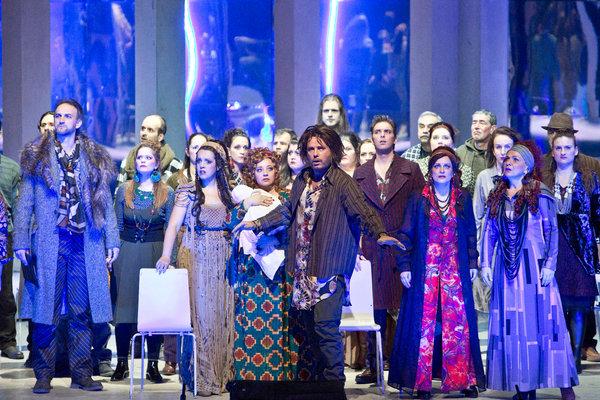
Call it Click Bait if you want, but there is no way you are not reading that article. When you do, you realize it’s not Click Bait at all, it’s simply an honest summary of the events. The Opera ‘Porgy and Bess’ is “a story of an African-American community’s struggle with violence, and Racism”, and has been played by an African-American cast since it’s origin in 1935. Last year the show was cast to white actors by Hungarian State Opera’s general director, Szilveszter Okovacs.

Okovacs had his cast sign a letter stating they identified with “African American Origins, and spirit”. The unusual letter was crafted and signed in response to strong criticism from the estate of the original writer of the Opera, George Gershwin, who claims that when Okovacs obtained the rights to the opera,  he agreed “in writing” to cast African-American singers in the opera.

hungarians

Bulk of the article after the initial description of events displays different accounts of how the licensing agreement read, and what it may, or may not have implied. One Woman from an English Opera company stated that in the agreement she signed for the rights to the Opera, it didn’t explicitly say “the signers had to be black but in effect you cannot have white signers playing the main roles”. Not having access to the agreement itself, the writer articulates the different accounts and claims made by both Okovas and the Gershwin estate.

Along with letting each side of the dispute give their account, the writer pulls in outside details, such as nothing that much of the cast claimed to have rehearsed with photocopied music scores (original scores would have most likely been provided if the rights were obtained fully), as well as mentioning that when the show opened a disclaimer was made on the play bills and posters stating that the production was “contrary to the requirements for the presentation of the work”. Although Okovas claims he had full rights to the production, despite what the Gershwin estate says, details like these seem to implicate him further.

The Best Thing I Read this Week

New york times

Trying to hone up a bit on my ‘media literacy’ skills, I was looking at pieces written by major news outlets labeled as ‘opinion’ pieces. Knowing that throughout the mainstream media world there are pieces written of sheer objective fact, as well as opinion pieces that are usually centered around a set event or idea relevant in today’s world, but incorporating the writers opinion. I wanted to see exactly what key differences separate normal reporting from opinion pieces. I came across a New York Times article called “Why are We Still Slaughtering the American Bison?”. What struck me about this article is that, although it had the small note ‘opinion’ just above the headline, If I hadn’t seen that I would not have categorized it as an opinion piece at all. so based on this piece what are the subtleties that give it the sub-heading ‘opinion’?

The article centers around an agreement between the Sioux and Assiniboine Tribal Nations and the Yellowstone National Park service that requires the surplus of Bison Yellowstone has each year be sent to the Fort Peck Reservation and released back into its natural habitat rather than being sent to a slaughterhouse.

Bison

The concern over this agreement stems from a disease that plagues the cattle industry called bucellosis, which is believed to be carried heavily in the American Bison population. the writer points out that although the Fork Peck Reservation has built a quarantine facility for the bison four times the size of any built in Yellowstone, it has still taken park officials four years to start actually releasing Bison to the Tribal Nations, during which all surplus of bison in the park were sent for slaughter.

The article initially reads like any other objective article. there is no specific paragraph or interlude between facts where the writer seems to present his own argument. I think what sets this piece apart from other reporting is the tone of the piece as a whole. the headline works as almost a thesis; “Why are we still slaughtering the American Bison”. It’s clear immediately where the author stands on the issue, and the following text is his way of presenting fact an information to back up his original point. All of the facts presented in this article, although they are facts, are moving in the direction of establishing the National Park service as another U.S. institution adamant on keeping indigenous communities repressed. I’m not arguing that this may or may not be the case, I simply feel that this distinction is very important in journalism. Passing off opinionated articles as objective truth can be very dangerous, and although the article is very well written and certainly holds alot of weigh in current events, the distinction that it is an ‘opinion’ piece is crucial for how it is read and interpreted.

Finding the Truth in Death and Destruction: an Inside Look at Crime Reporting

Extracting fact from horror, and tragedy is a tedious practice. Being able to separate objective truth from the emotion and romanticism that shrouds many scenes covered by real life crime reporters is certainly a difficult task.  “people say ‘you write about crime’ … I write about death and destruction. Which is kind of… like, morbid in a way” Veteran crime reporter, Aaron Besecker opened by saying.

press conference picture
Buffalo News crime reporter, Aaron Besecker

Besecker, a graduate of the University at Buffalo, has worked for the Buffalo News for the past 12 years holding a vast number of different positions, including City Hall coverage, 6 a.m. breaking news reporter, and assistant web editor. In his time of crime reporting Besecker has seen, and covered quite a bit in Western New York. He recounted his time covering both the City Grill shooting, a mass shooting in the City of Buffalo that left four dead and another four wounded; as well as the crash of flight 3407, a commercial airliner that went down in a residential suburb of Buffalo and leaving 50 people dead.

“You want to get the whole story about the person” Besecker stated when dealing with any tragic event. He went on tell of an an instance in which he had received severe backlash from not only the family but the police department alike for attempting to humanize the victim of a shooting that police believed was also involved in criminal activity. Besecker emphasized how much certain sources may have a skewed view on any specific person, and when dealing with death it is important to get the most objective information you can, saying “Some people assume .. youre just gunna write only nice things, and thats not my job. My job is to write the truth, my job is to write… reality”

Besecker was asked about his view of law enforcement, and how it had been shaped reporting on crime for the past decade. “I try to keep an open mind about it” he responded, noting that there are, simply, “bad apples”, however, “I have to be cognizant of the reality of this… police can be secretive, and they cover for each other”

Another difficult, yet crucial aspect of crime reporting Besecker touched on was having to talk with family and friends of victims shorty after a tragedy. however in the process of getting  “the whole story about the person who died”, Besecker stated that, with regard to close friends and family, “usually the people who know the person the best are not in any shape to wanna talk to you”.

“I usually deal with alot of people who are… like having the worst week of their life” Besecker mentioned about his work. So how does a reporter approach people who are going through such a hard time in a way that will get them the best, and most reliable information, while staying respectful to their source? when asked Besecker said “alot of people understand, you know, your just trying to do your job.” and how even in some instances “people will use the interview process … as, like, their (source of) venting, … so if you happen to be on the other end of that … you can tell a story that way”.

Finally, Besecker addressed the recent technological transformation of journalism outlets. Touching on how writing and publishing online, opposed to hard print, affects the work of a journalist and the public response, especially for a crime reporter. He immediately made the observation of how much more criticism journalists receive in the age of the internet, given the relative ease of posting a comment online or writing an email. “If they had to write you a letter, you don’t hear any of this!” Besecker claimed. Addressing accusations of click bait, and how overuse of click bait articles can overshadow and dilute the work of honest journalists, Besecker stated that, although, “we want digital attention”, when accused of ‘want(ing) clicks’, as a journalist, “I do everything because I want people to read it”.


Start Your Spring off Right With the Capital District Garden Show.

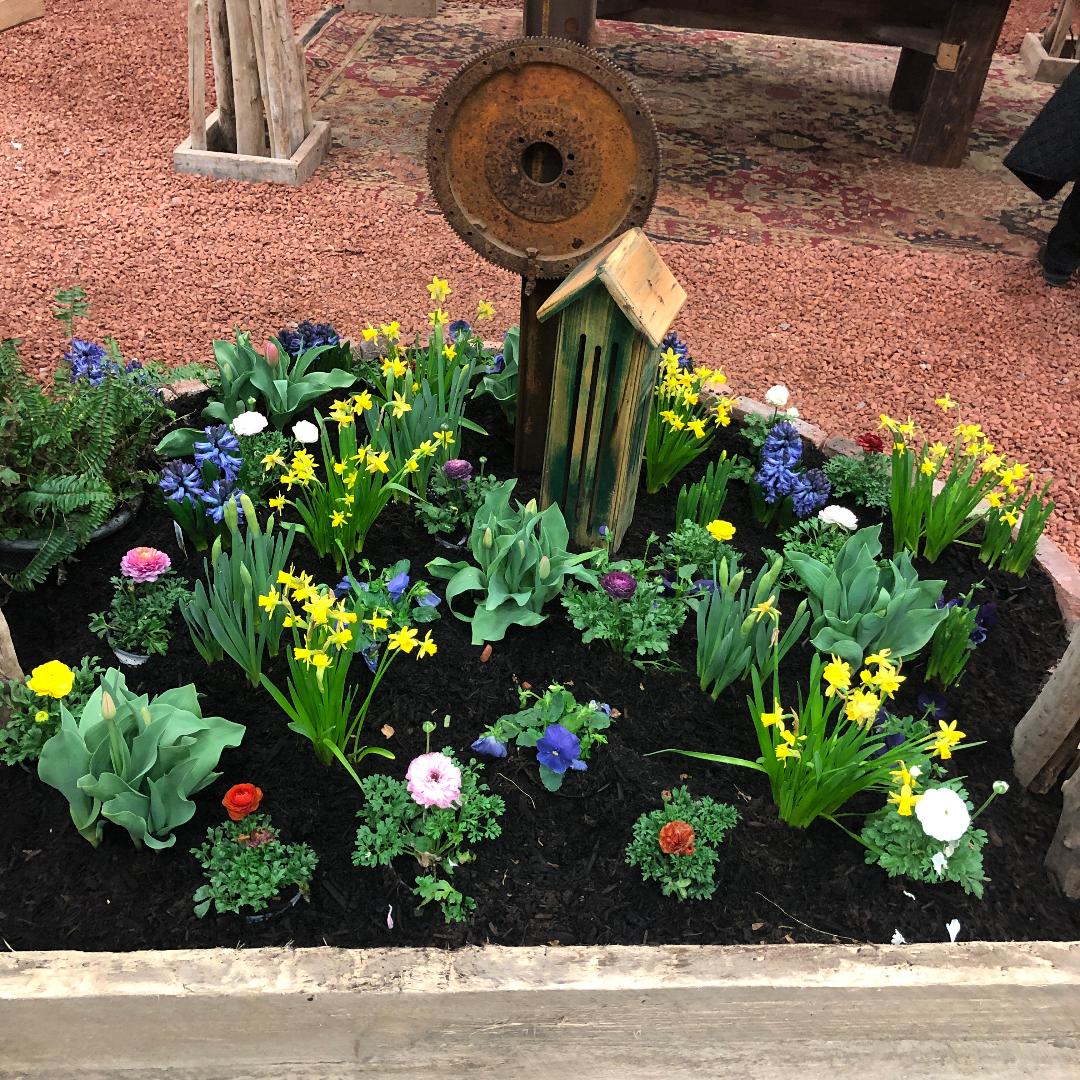
Garden Opener

Spring has sprung! It seems to be another victory for the groundhog Puxatony Phil, predicting spring will come early this year, in a beautiful display at the Capital District Garden Show. Possibly second only to Albany’s annual Tulip Festival in May, the Capital District Garden Show, open Friday March 22 through Sunday March 24 is a beautiful display of local artists, florists, and Botany specialists. Located throughout the Hudson Valley Community College, displays range from small scale bouquets, to full scale gardens with man-made ponds.

First entering the main lobby, guests are met with dozens of small scale flower arrangements done by local artist. Some sections featured displays meant to mirror famous paintings such as Van Gogh’s Starry Night, and Irises; others are set to compliment unique table settings and food displays.


Continuing through the first display room, the full size basketball stadium is packed with local plant, and food vendors from all over the capital region. Walking through the narrow isles eventgoers can talk to local florists, buy beautiful assortments of potted plants and cacti, and of course, fill up on free samples.


The main garden area, located over the college’s Ice rink, is filled with breathtaking large-scale displays of full gardens complete with enormous flower beds, rustic wooden art, and even a sand sculpture over 10 feet tall. One of the beautiful displays in the garden area by local artist Danny Killion, features archways, canopies, and statues crafted from driftwood found by local waterways.


However, the event is not simply a show and tell for local artists. Throughout all three days the garden show hosts over 50 presentations and classes on gardening and floral techniques for the everyday home, as well as impacts of invasive species on the local environment. One such presentation, given by floral specialist Chris Grigas, gave viewers an inside look at the techniques of a professional florist. Going beyond a simple demonstration of flower arrangements, Grigas opened up by describing how to deal with the “Ugly” vase and emphasized how using borders of natural foliage and long Steel-grass gives the arrangement “width and dimension”.


Along with a variety of classes and presentations, members of local botany groups such as the North Eastern New York (NENY) Orchid Society  had set up displays to offer helpful tips and techniques on growing and caring for different plants. Orchid specialist and member of the NENY Orchid Society, Rachael Rourke spent the afternoon lending advice to guests, including busting an old myth that using Ice cubes are the best way to water orchids.


The Capital District Garden Show offers a great weekend event for guest to be able to check out beautiful displays of flowers as well as get advice from experts at the start of the gardening season, as well as relief that the harsh New York winter has finally come to an end.


Covering my First even; How’d it go?

IMG_0050

Last week I covered UB’s Environmental Network’s presentation on Diversity and Divestment. Overall I would say my experience covering the event was very positive. I had a good view of the entire presentation, as well as the opportunity to ask questions to the speaker throughout. Also, contributing to my coverage, there were other members of the audience who were very much involved in the presentation, such as the presidents of both the Environmental Network club, and the Fossil Free UB club.

I will say one of the crucial mistakes I made was neglecting to take down as many specific names as I could during the presentation. While writing my article there were a few cases where I had a fact or statement made by an individual, that I feel would have been far more validated to the reader if I had attached a name to it rather than simply say “top officials on Wall Street claim…”. Apart from that I didn’t have many other issues with my information gathering and writing. Although I was not able to sit down with the speaker one on one after the event, I did get the opportunity to interview the president of the club which put on the event, which was very helpful.

It was certainly a relief to be able to write firsthand about an event I was interested in myself. I know this is mostly not the case for a journalist, but being invested in the subject I was writing about and being able to give my account on what I experienced made the writing process far more enjoyable. I would certainly have to classify this as my favorite school assignment so far, although I will say based on my other classes this semester, the bar has been set pretty low.

The Best Thing I Read this Week: WWF Implication in Human Rights Violations

After covering an event last week, I think I’ve developed more of an interest in strict, fact-based reporting, and how it is presented. That’s why I’m going to have to give the best thing I read this week to a Buzzfeed article on violations of human rights by, World Wildlife Foundation (WWF) backed, park rangers in Africa. I know Buzzfeed gets some criticism for click-bait articles and other poor journalism practices, but I was actually very impressed by the amount of information presented in this piece.

WWF

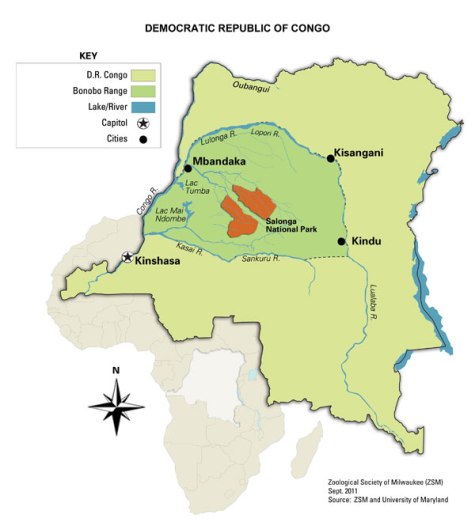
In summary the article focus on numerous human rights violations carried out by park rangers, known to locals as the eco-guard in Cameroon, and the Democratic Republic of the Congo.  The job of these rangers are to protect the parks wildlife from poachers, which includes patrolling the areas, and apparently raiding local villages in suspicion of harboring poachers. Buzzfeed sites multiple accounts from both local villagers, and human rights investigators sent by the WWF and other international organizations. These accounts included violent raids where villages were burned, torture, gang rape, and murder.

Not only did the article detail firsthand accounts of the abuse, but link WWF with the groups that were committing them. According to Buzzfeed, the WWF has not only substantially funded these eco-guards, but even helped to train them on site. The WWF was even made a co-manager of Salonga national park in the Congo where multiple accounts of human rights violations were reported, as well as a WWF employee named top official and put in charge of the parks eco-guard. According to Buzzfeed when formal reports of this abuse reached head executives of the WWF in 2015, but were not made public, the foundations direct general stated that the reports were “matters for the government of Cameroon”. According to locals as recent as 2018, not much has changed.

DRC
Outline of Salonga National Park (Orange) in the Democratic Republic of the Congo

What kept my interest throughout this article wasn’t just the allegation that a foundation held in such high regard as the WWF was supporting such blatant atrocities, but the articles ability to support that claim. Throughout the article the author sites numerous firsthand accounts of the abuse with specific names and dates to verify them, and doesn’t cloud the piece with their own judgment. A claim as substantial as the one made in this article will require a lot of evidence to back it up in order to be taken seriously. This piece does a very good job at doing just that.